


Views: 0 Author: Site Editor Publish Time: 2026-03-30 Origin: Site


Image Source: unsplash
You see the name dicyandiamide in many places. It is a chemical that helps make medicines, fertilizers, electronics, and textiles. You may find it in products like powdered milk or in fields treated with fertilizer.
Dicyandiamide residues were found in milk products from New Zealand, attributed to cows grazing on grass treated with DCD-containing fertilizers.
The market for dicyandiamide keeps growing:
It reached US$ 344.5 Million in 2022.
It is expected to grow to US$ 715.9 Million by 2031.
You might wonder what it is, where it comes from, how safe it is, and why it matters to you.
Dicyandiamide is a useful chemical. It is in many things we use every day, like medicines, fertilizers, and electronics. It helps make products safer and stronger. This means things last longer and work better. Dicyandiamide also helps the environment. It lowers nitrogen runoff and greenhouse gases when used on farms. There are strict rules to keep products with dicyandiamide safe for people and nature. Washing fruits and vegetables can help remove dicyandiamide left from fertilizers.

Image Source: unsplash
Dicyandiamide is used in many industries. It has a simple structure but is very useful. Dicyandiamide is a white solid that looks like crystals. It sometimes smells a little like amines in the lab. Its formula is C2H4N4. This means it has carbon, hydrogen, and nitrogen atoms.
Here are some facts about dicyandiamide:
Chemical formula: C2H4N4
Molecular weight: 84.08 grams per mole
Appearance: White or off-white solid
Solubility: Dissolves well in water
Melting point: About 209°C
Flammability: Not flammable
Toxicity: Low toxicity
Dicyandiamide is special because it stays stable in normal conditions. You can keep it for a long time without it breaking down. It mixes easily with water, so it is simple to use.
You can compare dicyandiamide to other chemicals with nitrogen. It is more stable and mixes better with water than many others. Here is a table showing the differences:
Property | Dicyandiamide | Other Nitrogen-Containing Compounds |
|---|---|---|
Stability | Stays stable in normal conditions | Often less stable than dicyandiamide |
Hydrolytic Half-Life | Lasts over one year at neutral pH | Usually shorter for simple nitriles |
Solubility in Water | Dissolves well (260 g/L at 30 °C) | Often less soluble |
Solubility in Organic Solvents | Hardly dissolves in methanol, does not dissolve in ethanol, acetone, or ethyl acetate | Usually dissolves better in organic solvents |
Dicyandiamide has different names. Some people call it cyanoguanidine or dicyanimide. In the chemical industry, it comes in several grades. Each grade is made for a special use.
Grade | Description |
|---|---|
Pharmaceutical | Used in making medicines |
Electronic | Used in electronic parts |
Industrial | Used in many industrial jobs |
Each grade has its own purity level. You can see the levels in this table:
Grade | Purity Level |
|---|---|
Industrial Grade | 99.5% |
Pharmaceutical Grade | 99.7% |
Electronic Grade | 99.8% |
Higher purity grades are needed for sensitive uses like medicines or electronics. When you see dicyandiamide in something, you can trust it meets strict quality rules for its use.
Dicyandiamide is in many things you use every day. You might not notice it, but it is in your home, school, and even some foods. This chemical is special because it can do many jobs.
Here are some ways dicyandiamide is used in products:
It helps glue and coatings stick better.
It keeps PVC floors strong in homes and schools.
It makes paper, wood, and clothes harder to burn.
It is in fertilizers for gardens and farms.
It is an ingredient in glues and powder paints.
It helps electronics work by coating parts.
It cleans water by removing bad stuff.
It is in rubber things like tires and seals.
It helps colors stay bright in fabrics.
It is used to make some medicines.
Dicyandiamide makes things safer, stronger, and last longer. For example, it helps stop fabrics from burning and makes fertilizers help plants grow.
In water cleaning, dicyandiamide takes color out of dirty water. This is important for factories that dye fabrics. It works with many dyes and makes less waste than other chemicals. This means cleaner water for people and less pollution.
Dicyandiamide is important in many big industries. It is used in medicine, electronics, and more. The table shows how different businesses use it:
Sector | Application Description |
|---|---|
Chemical Manufacturing | Used in melamine resins, herbicides, and rubber accelerators |
Agriculture | Vital for making herbicides and as a fertilizer stabilizer to boost crop yields |
Construction | Needed for durable, heat-resistant resin materials |
Automotive | Used in high-performance coatings and adhesives |
Consumer Goods | Found in many everyday products |
In medicine, dicyandiamide is needed to make metformin. Metformin is a drug for type 2 diabetes. Dicyandiamide mixes with other chemicals to make the medicine work. The quality of dicyandiamide matters for how well the drug works.
Farmers use dicyandiamide in fertilizers. It keeps nitrogen in the soil longer. This helps crops grow and cuts down on pollution. Studies show that using these fertilizers can make crops grow 10-20% more. Plants use the nitrogen better and waste less.
In electronics, dicyandiamide makes circuit boards stronger. It helps keep water out and makes designs more exact. You find it in things like phones and computers.
Textile factories use dicyandiamide to keep colors bright and stop fires. It also helps clean water by taking out color and bad chemicals. This makes water safer for everyone.
Dicyandiamide is useful because it can be very pure. Companies make different grades for different jobs. High purity means it works better and is safer for things like medicine and electronics.
When you see things that last longer or help the planet, dicyandiamide might be the reason.
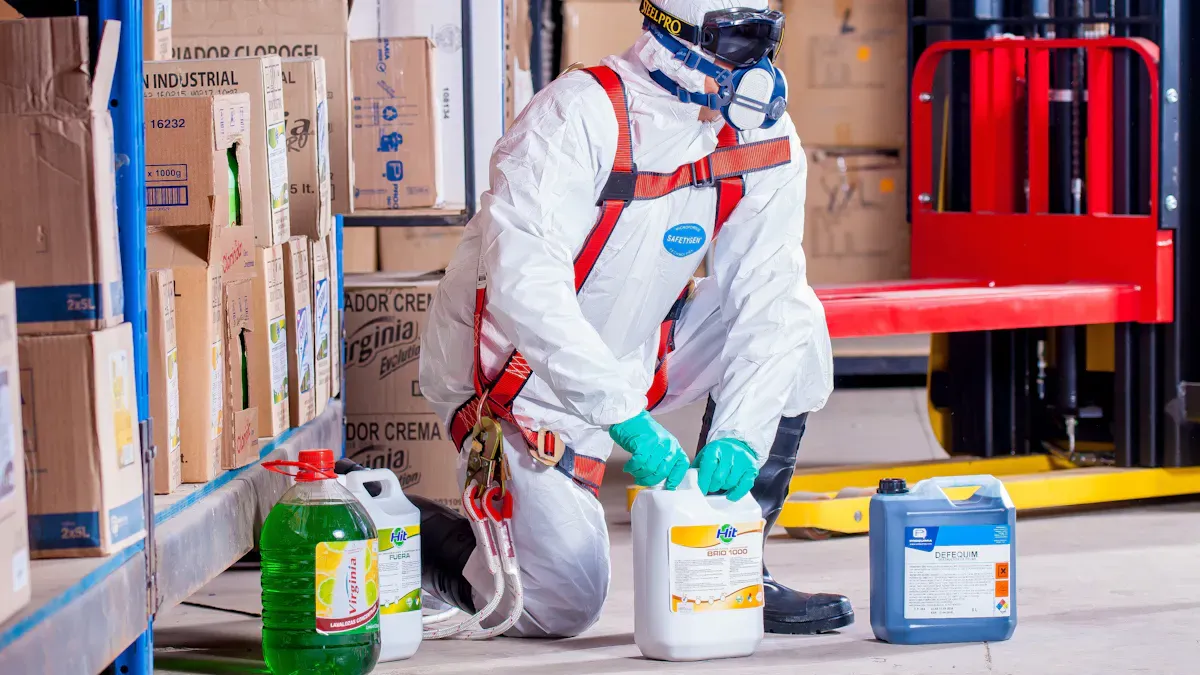
Image Source: pexels
You may wonder if dicyandiamide is safe for you and nature. Most people do not touch it directly. Farmers and factories use it, so it can get into soil and water. Farmers use dicyandiamide to keep nitrogen in the ground. This helps plants grow and stops pollution.
The table below shows what dicyandiamide does in nature:
Effect | Description |
|---|---|
N2O Emission Reduction | Small amounts slow nitrous oxide peaks. Large amounts almost stop these gases. |
Nitrite and Nitrate Levels | Keeps these chemicals low in wet soil. |
Nitrosobacterial Inhibition | Stops some bacteria that waste nitrogen. |
Environmental Impact | Cuts greenhouse gases and keeps more nitrogen in the ground. |
Dicyandiamide mixes well with water and does not turn into gas easily.
It helps plants use nitrogen, so less fertilizer washes into rivers.
When farmers use it right, water and soil stay clean and healthy.
Using nitrogen fertilizers can hurt air and water. Dicyandiamide helps by slowing down how fertilizer turns into gas and runoff.
You might ask if there are rules for dicyandiamide. Different places have their own laws.
The European Union has strict rules to protect nature.
The United States has clear rules and the EPA checks for safety.
Asia, like China and India, uses a lot but has fewer rules.
Most people are not at risk from dicyandiamide in daily life. Workers who use it wear safety gear. You can feel safe because products must meet high standards in most countries.
You may wonder if you need to worry about dicyandiamide in your daily life. Most people do not come into direct contact with this chemical. You might find it in products like medicines, treated fabrics, or food grown with certain fertilizers. Companies and governments check these products to make sure they are safe for you. When you buy food or medicine, you can trust that strict rules help keep you safe.
Tip: Always look for trusted brands and follow safety instructions on products. If you have allergies or health concerns, talk to your doctor before using new items.
You should know when dicyandiamide might become a concern. Most risks come from large-scale use in farming or industry. Sometimes, problems can happen if too much gets into the environment or food. Here are some situations where you should pay attention:
Some places have found dicyandiamide in groundwater.
High levels have been detected in food products in certain countries.
Governments now watch this chemical more closely to protect people and nature.
New rules may limit how much can be used in some markets.
If you live near farms or factories, you may want to learn more about local water and food safety. You can check reports from your local health department. Most people do not face risks from normal use, but staying informed helps you make good choices.
Note: Washing fruits and vegetables before eating can help lower any possible residue.
Dicyandiamide is a chemical that does not break down easily. Many businesses use it, like farms, hospitals, tech companies, and clothing makers. Most of it is made in Asia, mostly in China. It is very pure and checked for safety before use.
Dicyandiamide helps plants grow and keeps nature safe.
It is in things that last longer and work well.
There are strong safety rules and groups that watch how it is used.
You can trust products with dicyandiamide. Most people are not at risk from it every day.
Dicyandiamide is in many things you use. It is in medicines, fertilizers, electronics, and textiles. It helps make products safer and stronger. It also helps them last longer. You can find it in diabetes medicine. It is in fabrics that do not burn easily. It is also in chemicals that clean water.
Most people do not touch dicyandiamide by itself. Products with dicyandiamide must follow safety rules. Food, medicine, and things at home are checked before you use them. You can trust these items are safe.
Yes, a little dicyandiamide can get in food. This happens when farmers use fertilizers with it. Washing fruits and vegetables helps remove it. Food safety groups test food to keep you safe.
Keep dicyandiamide in a cool and dry spot. Make sure the lid is closed tight. This keeps it safe and stable.